2026 Excellence in Environmental Engineering and Science® Awards Competition Winner
Grand Prize - University Research
Mechanistic and Collaborative Wastewater-Based Epidemiology
Entrant: Kyle Bibby, Ph.D., P.E., BCEE
Engineer in Charge: Kyle Bibby, Ph.D., P.E., BCEE
Location: Notre Dame, Indiana
Entrant Profile
Kyle Bibby, PhD, PE, BCEE is a professor and associate department chair at the University of Notre Dame. Dr. Bibby is a globally recognized authority in microbial water quality monitoring, and in the wake of the COVID-19 pandemic has contributed significantly to the development of wastewater-based epidemiology (WBE) as a powerful and predictive public health tool. His impact is defined by two major contributions: the development of mechanistic models and the establishment of a national collaborative network.
As the Principal Investigator for the NSF Research Coordination Network (RCN) on WBE, Dr. Bibby pioneered the organizational structure for the field, successfully uniting researchers, utilities, and public health officials both within the United States and internationally. This network provided the necessary data sharing and collaboration to rapidly scale WBE both during and after the pandemic, including sharing protocols, data standards, and best practices.
Academically, Dr. Bibby’s laboratory is a leading force behind developing a mechanistic understanding of WBE. His work is contributing to move the field beyond simple correlation, developing advanced models that rigorously account for crucial variables between different diseases, sewer system dynamics, and human shedding rates. This modeling work continues to advance WBE for a wider array of diseases and applications, including rare and emerging disease monitoring. Dr. Bibby is an AAEES member and board-certified environmental engineer, as well as the founding faculty member of the Notre Dame chapter of Tau Chi Epsilon environmental engineering honor society.
Project Description
Demonstration of a comprehensive, integrated approach that considers all environmental media, i.e., air, water, and land.
While Dr. Bibby’s work focuses on the wastewater matrix, it exemplifies the ‘One Water’ and ‘One Health’ philosophies central to modern environmental engineering. His approach recognizes that wastewater is not merely a waste stream but a vital environmental sensor that integrates data from across the human-environment interface. This comprehensive strategy addresses contemporary public health challenges by bridging the gap between environmental monitoring and public health action. His contributions are two-fold: the deployment of organizational leadership for the NSF Research Coordination Network (RCN) and technical breakthroughs in mechanistic modeling. By leading the RCN, Dr. Bibby ensured that the latest research was rapidly transferred across three essential groups: research scientists (data generation), public health officials (data utilization), and water utilities (data collection). This fusion of rigorous environmental science with practical, standardized deployment demonstrates a highly effective integrated strategy for environmental health innovation by mitigating the spread of pathogens through our shared infrastructure.
Quality as evidenced by the degree of user satisfaction and proven performance.
Dr. Bibby’s work demonstrates exceptional quality, proven by its widespread adoption and tangible impact across the water sector. The broad and sustained participation in the NSF RCN serves as direct evidence of user satisfaction from utilities, public health officials, and researchers. While the true number of participants in a virtual network is difficult to determine, monthly webinars routinely drew ~100 participants, with some recordings viewed >1000 times! The influence of his technical contributions is evidenced by high citation metrics; Dr. Bibby was named a 2023 and 2025 Clarivate Highly Cited Researcher, a distinction given to the top 1% of researchers globally, driven primarily by his innovations in WBE. Furthermore, endorsements (attached) from the Water Environment Federation and the Los Angeles County Department of Public Health confirm that his research is not merely theoretical. It has successfully empowered utility member organizations to serve as indispensable partners in public health preparedness, translating academic excellence into high-performing engineering solutions.
Originality and innovation, representing the application of new knowledge, a new application of existing knowledge, or an innovative mix of existing knowledge.
Dr. Bibby’s work represents a profound step forward, demonstrating exceptional originality by transforming WBE from a reactive monitoring tool into a predictive public health intelligence system.Through the RCN, he facilitated workshops investigating the impact of disaster response on early-career researchers (Delgado-Vela, 2022) and expanding WBE applications to include bacterial targets (Philo, 2024), low-resource settings (Delgado-Vela, 2024), and vector-borne diseases (Ahmed, 2026). His group’s innovative mechanistic models represent a ‘new application of existing knowledge’ by applying fundamental environmental engineering principle, including mass balance, transport, and decay kinetics, to pathogens in the context of WBE. These models have been successfully adapted for SARS-CoV-2 (Crank, 2022); mpox (Chen, 2022); Zika (Chen, 2023); measles (Chen, 2025); sexually transmitted infections (Chen, 2025); and malaria (under review), as well as model validation using fecal indicators (Chen, 2025), representing a significant diversification of the WBE toolkit.
The complexity of the problem or situation addressed.
The implementation of WBE is an inherently complex engineering and logistical challenge. This complexity arises from highly variable disease shedding patterns, the physical and chemical dynamics of sewage collection systems, and the technical sensitivities of molecular analysis in complex matrices. Dr. Bibby’s group addressed these technical hurdles by developing mechanistic models that provide a rigorous framework for data interpretation, accounting for variability in pathogen shedding and disease and sewer dynamics. Beyond the technical, Dr. Bibby navigated the social complexity of aligning disparate stakeholders, including environmental engineers, microbiologists, public health practitioners, and utility managers. His leadership of the RCN provided the necessary platform for these groups to connect and share developments in real-time, facilitating a standardized approach to a multifaceted problem that crosses traditional disciplinary boundaries.
The extent to which the project contributes to or offers the prospect of contributing to environmental, social, and economic advancement.
The global response to COVID-19 highlighted the staggering social and economic costs of infectious disease outbreaks. Dr. Bibby’s work provides a framework to mitigate these costs by establishing WBE as a cost-effective, non-invasive early warning system. By providing public health officials with more accurate community-level infection data, his mechanistic models allow for more targeted and efficient resource allocation, contributing to the prevention of broad-scale economic shutdowns. This work advances environmental engineering as a proactive health-protection profession, offering a scalable path toward global health security. Through both the RCN’s collaborative infrastructure and the increased accuracy provided by his models, Dr. Bibby has ensured that environmental engineering remains at the forefront of social and economic resilience in the face of future biological threats.
Representative Publications
- Chen, William, and Kyle Bibby. Validation of Wastewater-Based Epidemiology Model Predictions and the Influence of Super-Shedders and Sewage Dynamics Using the Fecal Indicators Pepper MildMottle Virus and Carjivirus. Environmental Science & Technology. Accepted.
- Ahmed, Tahmina, Anna Mehrotra, David A. Larsen, Thomas Clerkin, Rachel Noble, Elana Chan, Chan,FatmaFatma Zahra Guerfali, Marlee Shaffer@, Rachel Poretsky, Sugyan Mani Dixit, Rolf U. Halden, Kyle Bibby, Jeseth Delgado Vela. Advancing Wastewater-Based Epidemiology through Curricular Innovation. ACS ES&T Water (2025).
- Chen, William, and Kyle Bibby. Temporal, Spatial, and Methodological Considerations in Wastewater-Based Epidemiology for Sexually Transmitted Infections. ACS ES&T Water 5, no. 5 (2025): 2533-2546.
- Chen, William, and Kyle Bibby. Temporal, spatial, and methodological considerations in evaluating the viability of measles wastewater surveillance. Science of The Total Environment 959 (2025): 178141.
- Delgado Vela, Jeseth, Sarah E. Philo, Joe Brown, Mami Taniuchi, Molly Cantrell, Alexandra Kossik, Maya Ramaswamy et al. Moving beyond wastewater: perspectives on environmental surveillance of infectious diseases for public health action in low-resource settings. Environment & Health 2, no. 10 (2024): 684-687.
- Philo Sarah E., De León Kara B., Noble Rachel T., Zhou Nicolette A., Alghafri Rashed, Bar-Or Itay, Darling Amanda, D'Souza Nishita, Hachimi Oumaima, Kaya Devrim, Kim Sooyeol, Gaardbo Kuhn Katrin, Layton Blythe A., Mansfeldt Cresten, Oceguera Bethany, Radniecki Tyler S., Ram Jeffrey L., Saunders Lauren P., Shrestha Abhilasha, Stadler Lauren B., Steele Joshua A., Stevenson Bradley S.,Vogel Jason R., Bibby Kyle, Boehm Alexandria B., Halden Rolf U., Delgado Vela Jeseth. Wastewater surveillance for bacterial targets: current challenges and future goals. Applied and environmental microbiology 90, no. 1 (2024): e01428-23.
- Chen, William, and Kyle Bibby. Making Waves: Establishing a Modeling Framework to EvaluateNovel Targets for Wastewater-Based Surveillance. Water Research (2023): 120573.
- Chen, W. and Bibby, K., 2023. A Model-Based Framework to Assess the Feasibility of Monitoring Zika Virus with Wastewater-Based Epidemiology. ACS ES&T Water, 3(4), pp.1071-1081.
- Crank, K., Chen, W., Bivins, A., Lowry, S. and Bibby, K., 2022. Contribution of SARS-CoV-2 RNA shedding routes to RNA loads in wastewater. Science of The Total Environment, 806, p.150376.
Click images to enlarge in separate window.
 |
|
|
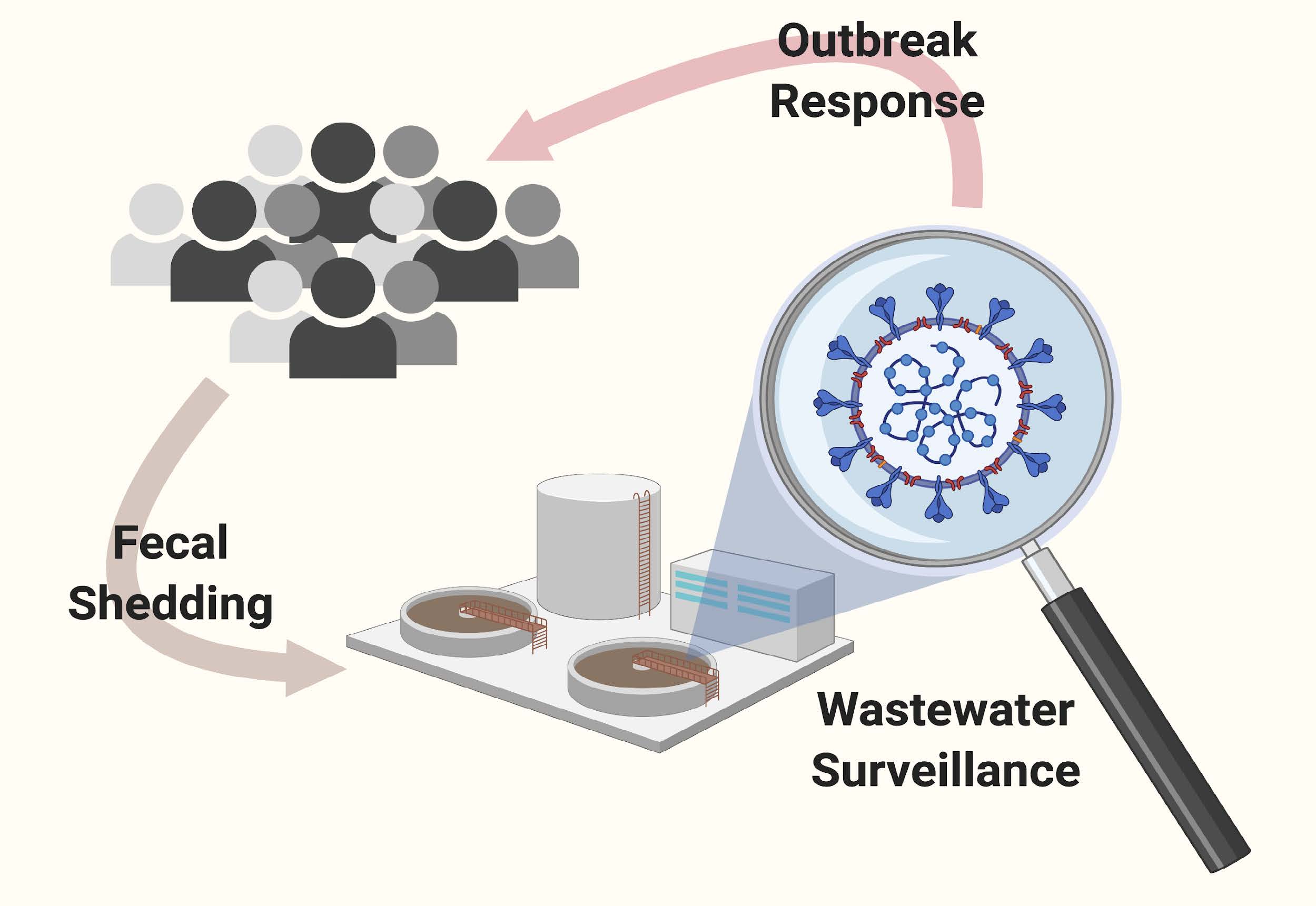
Figure 1. Conceptual schematic of wastewater-based epidemiology (Bivins et al., 2020).
|
|
|