- About
- About AAEES
- AAEES Staff
- AAEES Board of Trustees
- American Academy of Environmental Engineers Certification Board
- American Academy of Environmental Scientists Certification Board
- AAEES Committees
- The History of AAEES
- Representatives to Other Organizations
- Ethics and EDI Statement
- Public Input Opportunities
- Service to the Public and the Profession
- Selecting Consultants
- Privacy Policy
- Cookie Policy
- Board Certification
- Membership
- Education & Careers
- News & Events
- Awards
- AAEES Awards Criteria
- 40 Under 40 Recognition Program
- Edward J.Cleary Award
- Excellence in Environmental Engineering and Science Education
- Gordon Maskew Fair Award
- Honorary Member
- International Honorary Member
- Ralph and Joe Bales Graber Science Award
- Stanley E. Kappe Award
- Environmental Communications Awards Competition
- Excellence in Environmental Engineering and Science Competition
- The AAEES Chapter Blue Marble Award
- Resources
- AAEES Microcredentials
- Guiding Documents
- Annual Reports
- AAEES Press Releases
- AAEES Website How To VIdeos
- Environmental Engineer and Scientist
- Environmental Engineering Body of Knowledge
- PFAS Resources
- Specialty Examination Guide
- Students and Young Professionals Resources
- Who's Who in Environmental Engineering & Science®
- Donate

2026 Excellence in Environmental Engineering and Science® Awards Competition Winner
Honor Award - DesignThe Big Creek WRF ExpansionEntrant: Fulton County and Archer Western/Brown and Caldwell Joint Venture Entrant Profile  The entrant for this award is Brown and Caldwell (BC), which served as a joint-venture partner with Archer Western and as the lead designer and Engineer of Record for the project. BC is a leading employee-ownedenvironmental engineering and construction services firm specializing in water, wastewater, and environmental infrastructure. Founded in 1947, BC partners with public agencies and private clients to plan, design, and deliver resilient, sustainable solutions that protect public health and the environment. BC is widely recognized for technical excellence in advanced treatment technologies and collaborative delivery methods. The Big Creek Water Reclamation Facility Expansion was delivered as a progressive design-build project and engaged more than 200 BC staff from 27 offices across the United States, contributing to a collective 2.5 million man-hours of design and construction effort. In addition to BC, the following design team members and owner’s agents supported the project. As this is anengineering award submission, construction subcontractors are not listed:
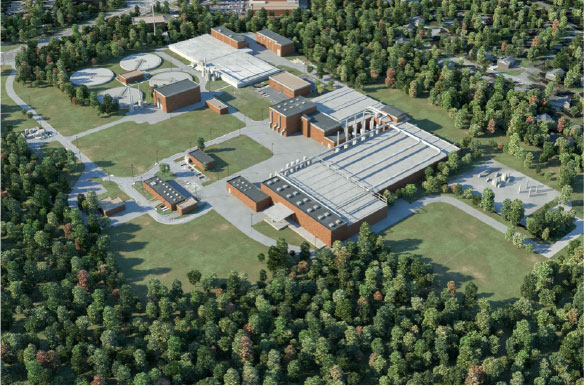
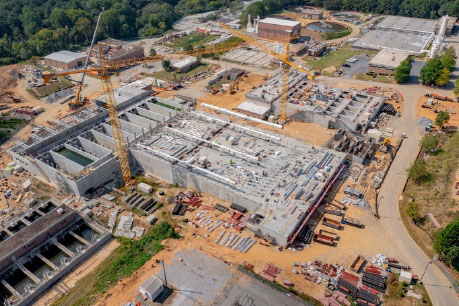
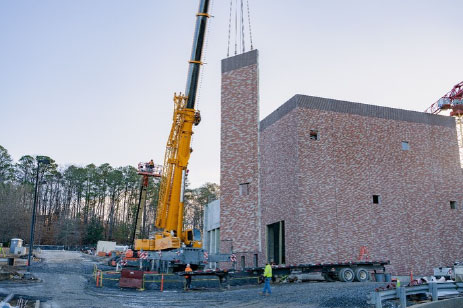
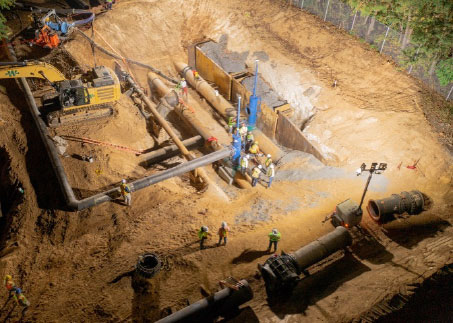
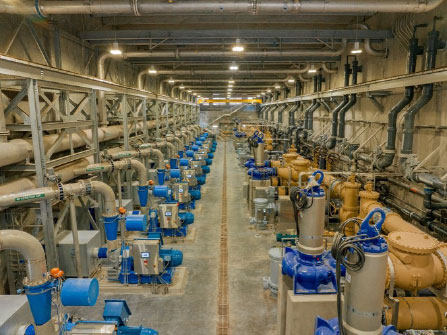
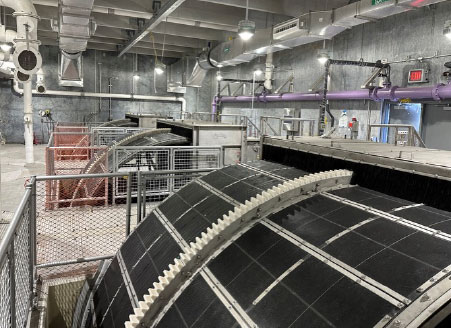
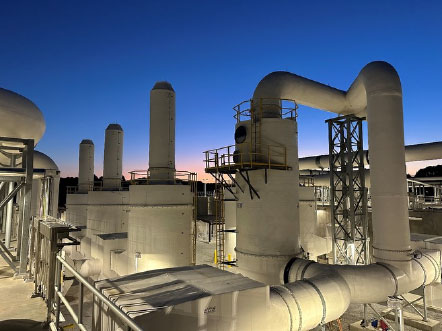
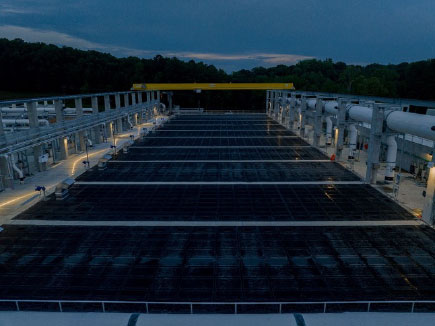
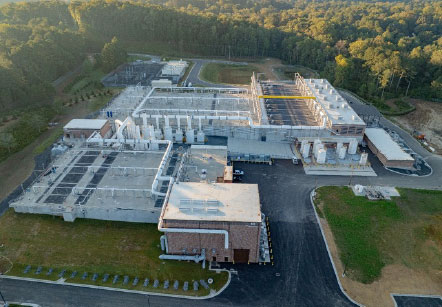
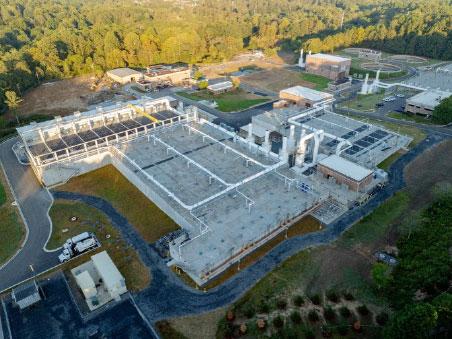
Project DescriptionThe Big Creek Water Reclamation Facility ExpansionFulton County’s Integrated, High-Performance, and Innovative InfrastructureInvestment for Public and Environmental BenefitThe Big Creek Water Reclamation Facility (WRF) Expansion represents one of the most complex and forward-looking water infrastructure investments undertaken by Fulton County in recent decades. Delivered through a collaborative progressive design-build approach, the project expands treatment capacity from 24 million gallons per day (MGD) to 32 MGD while replacing and modernizing aging infrastructure originally constructed in the 1970s. With a total construction value of $325 million, the project improves environmental performance, strengthens system resiliency, and delivers long-term economic and public health benefits for Fulton County and the greater Atlanta region. The project exemplifies a comprehensive, integrated approach to environmental engineering, combining technical excellence, innovation, and proven performance to address challenges at thenexus of water quality, community growth, regulatory compliance, and sustainability. 1. Comprehensive, Integrated Approach Across Environmental MediaFrom its inception, the Big Creek WRF Expansion was conceived as a fully integrated new facility rather than aseries of incremental upgrades to the existing plant. The project holistically addresses water, air, energy, solids, land use, and community interface, ensuring that improvements in one environmental medium did not create unintended impacts in another. Water quality improvements were integrated with hydraulic optimization, nutrient removal performance, andfuture regulatory flexibility. The expanded facility is designed to reliably meet stringent effluent requirements, including total phosphorous concentrations below 0.30 mg/L, while accommodating peak wet-weather flows exceeding 64 MGD. An innovative hydraulic design enables gravity-driven forward flow through the entiretreatment process, making Big Creek the largest full-gravity membrane bioreactor (MBR) facility in theUnited States and substantially reducing long-term energy demand. Air quality considerations were addressed through full enclosure of all process tanks and installation of a comprehensive odor control system consisting of large-scale chemical scrubbers with granular activated carbon (GAC) polishing. The system achieves greater than 99.5% hydrogen sulfide removal, ensuring no detectableodors beyond the facility boundary. Noise mitigation measures were incorporated to maintain off-site sound levels within existing ambient conditions, protecting nearby residential neighborhoods. Energy efficiency and sustainability were advanced through optimized aeration control, high-efficiency blowers and pumps, an innovative side-stream fermentation process, and advanced process automation. Collectively,these measures reduce annual energy consumption by an estimated 6–8 million kWh, corresponding to approximately $500,000–$650,000 in annual operating cost savings. Construction innovations reused more than 200,000 cubic yards of soil and rock onsite, significantly reducing hauling, emissions, and project cost. 2. Quality Demonstrated Through Scientific Rigor and Proven PerformanceThe quality of the Big Creek WRF Expansion is grounded in sound engineering science, rigorous analysis, and demonstrated operational performance. Process selection and configuration were informed by detailedbiological and hydraulic modeling, pilot testing, and benchmarking against comparable large-scale facilities operating under similar regulatory conditions. Life-cycle cost analyses evaluated 30-year capital, energy, chemical, and maintenance costs, guidingdecisions that reduced total projected lifecycle costs by more than $25 million compared to baselinealternatives. Redundancy was incorporated into all major systems, with N+1 or greater reliability provided for critical equipment to ensure uninterrupted treatment during maintenance or equipment outages. Advanced instrumentation and control systems provide real-time monitoring of nutrient removal, aeration efficiency, and solids inventory, enabling operators to dynamically optimize performance. Since commissioning of initial phases, the facility has demonstrated consistent 100% permit compliance, improved process stability during storm events, and a measurable reduction in operator intervention and manual control. 3. Originality and Innovation Through Creative IntegrationWhile grounded in proven technologies, the Big Creek WRF Expansion distinguishes itself through an innovative integration of systems, delivery methods, and operational strategies. The progressive design-build delivery modelenabled early contractor involvement, collaborative risk management, and real-time cost validation, resulting in more than $75 million in cost avoidance and value-based design enhancements. Technically, the project integrates advanced biological nutrient removal and membrane bioreactor (MBR)configuration, ammonia-based aeration control, and optimized internal recycle strategies to improve nitrogen removal efficiency while minimizing blower energy demand. The use of Side-stream Enhanced Biological Phosphorus Removal (S2EBPR) significantly reduces chemical usage required to meet phosphorus permit limits. Digital delivery tools—including laser scanning of more than 500,000 square feet of existing facilities, full 3Dmodeling, and clash detection—were used to integrate new infrastructure with legacy systems, reducing construction rework, schedule risk, and operational conflicts. 4. Complexity of the Problem AddressedThe Big Creek WRF Expansion addressed an unusually complex set of challenges. Construction was executed on a constrained site while maintaining continuous treatment for a service population exceeding 250,000 residents. More than 70% of the work occurred adjacent to or within active treatment areas, requiring detailedmaintenance-of-plant-operations (MOPO) planning and zero tolerance for effluent violations. Construction occurred during the COVID-19 pandemic and global supply-chain disruptions that drove laborshortages, material volatility, and extended equipment lead times across the water sector. Despite these conditions, the project team mitigated risk through early procurement, flexible sequencing, and real-time cost validation, successfully maintaining the project budget and schedule. Execution requiredsophisticated sequencing, interdisciplinary coordination, and continuous collaboration among the owner, designer, constructor, and operators. 5. Contributions to Public, Environmental, and Economic AdvancementThe Big Creek WRF Expansion delivers lasting benefits across environmental, public health, social, and economic dimensions. Environmentally, improved effluent quality protects downstream waterways andcontributes to watershed-level nutrient load reductions measured in hundreds of tons per year over the facility’s design life. From a public health perspective, the project ensures reliable wastewater treatment for one of Georgia’s fastest-growing regions while eliminating historical odor and noise concerns. Economically, reduced lifecycle costs, lower energy consumption, and improved resiliency protect public investment and support long-term regional growth. ConclusionThe Big Creek Water Reclamation Facility Expansion exemplifies excellence in integrated environmental engineering.Through scientific rigor, innovation, and collaborative delivery, the project addresses an exceptionally complex challengewhile delivering measurable benefits to the environment, public health, and the regional economy. It stands as a model for modern water infrastructure—efficient, resilient, and future-ready. Big Creek WRF Process Flow Diagram 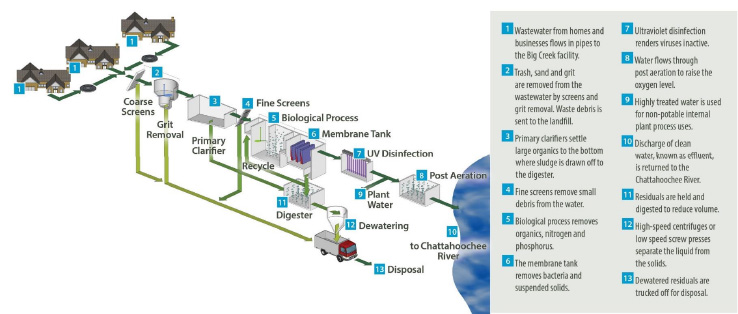 Click images to enlarge in separate window.
Click here to return to the list of 2026 winners. |
Our Partners