- About
- About AAEES
- AAEES Staff
- AAEES Board of Trustees
- American Academy of Environmental Engineers Certification Board
- American Academy of Environmental Scientists Certification Board
- AAEES Committees
- The History of AAEES
- Representatives to Other Organizations
- Ethics and EDI Statement
- Public Input Opportunities
- Service to the Public and the Profession
- Selecting Consultants
- Privacy Policy
- Cookie Policy
- Board Certification
- Membership
- Education & Careers
- News & Events
- Awards
- AAEES Awards Criteria
- 40 Under 40 Recognition Program
- Edward J.Cleary Award
- Excellence in Environmental Engineering and Science Education
- Gordon Maskew Fair Award
- Honorary Member
- International Honorary Member
- Ralph and Joe Bales Graber Science Award
- Stanley E. Kappe Award
- Environmental Communications Awards Competition
- Excellence in Environmental Engineering and Science Competition
- The AAEES Chapter Blue Marble Award
- Resources
- AAEES Microcredentials
- Guiding Documents
- Annual Reports
- AAEES Press Releases
- AAEES Website How To VIdeos
- Environmental Engineer and Scientist
- Environmental Engineering Body of Knowledge
- PFAS Resources
- Specialty Examination Guide
- Students and Young Professionals Resources
- Who's Who in Environmental Engineering & Science®
- Donate

2026 Excellence in Environmental Engineering and Science® Awards Competition WinnerHonor Award - University Research
|

|
Name |
Title |
Affiliation |
Department |
Role in project |
|
Sarina Ergas |
Flom Endowed Professor |
Univ. South Florida |
Civil & Environmental Engineering |
Led USF Team: management, advising, data quality, publications. |
|
Meng Wang |
Associate Professor |
Penn State Univ |
Energy & Mineral Engineering |
Led Penn State Team: management, advising, data quality, publications. |
|
Michal Green |
Professor Emeritus |
Technion Israel |
Environmental, Water & Ag. Engineering |
Led Technion Team: management, advising, data quality, publications. |
|
John Kuhn |
Professor |
Univ. South Florida |
Civil & Environmental Engineering |
Co-PI at USF. Student advising, led research on biofilm carrier development. |
|
Sheyla Chero Osorio |
Graduate Research Asst. |
Univ. South Florida |
Chemical, Biological & Materials Engineering |
Graduate research assistant. Carried out investigations of IX-PN/A process, which formed the basis of her dissertation. |
|
Ananda S. Bhattacharjee |
Assistant Research Professor |
Univ. South Florida |
Civil & Environmental Engineering |
Led microbial community analysis at USF. |
|
Tengge Zhang |
Graduate Research Asst. |
Penn State Univ. |
Energy & Mineral Engineering |
Developed modeling framework for the hybrid IX-PN/A process |
|
Zuleima Karpyn |
Professor & AssociateDean |
Penn State Univ. |
Energy & Mineral Engineering |
Co-PI at Penn State. Advised student on the modeling development. |
|
Leiyu He |
Graduate Research Asst. |
Penn State Univ. |
Energy & Mineral Engineering |
Carried out research on carbon capture, low temperature IX-PN/A process and LCA, which formed the basis of his dissertation. |
|
Sheldon Tarre |
Researcher |
Technion Israel |
Environmental, Water & Agricultural Engineering |
Lead researcher at Technion Israel. Carried out investigations of 2-stage IX coupled with treatment of brine waste using PN/A. |
Project Description
One of the most remarkable advances in wastewater treatment in the past three decades is the use of partial nitritation/anammox (PN/A) for nitrogen removal. However, PN/A has mainly been used to treat high ammonia strength wastewaters, such as anaerobic digestion sidestreams. It is not typically applied to remove nitrogen from mainstream municipal wastewater (MMW) because the high COD and low ammonia concentrations in MMW do not favor selection and retention of slow growing ammonia oxidizing microorganisms (AOM) and anammox and suppression of undesirable nitrite oxidizing bacteria (NOB) and heterotrophic denitrifiers.
Innovation
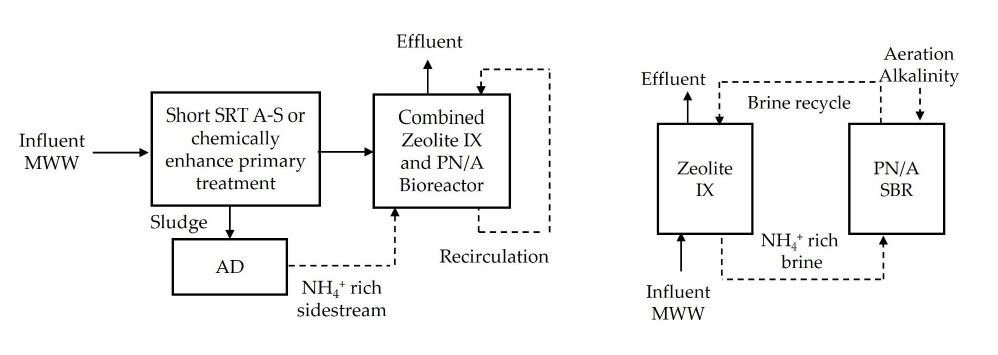
To overcome these challenges, research teams at the University of South Florida (USF), Penn State University,and the Technion Israel Institute of Technology developed a novel process that combines ion exchange (IX) on natural zeolite minerals and PN/A. In this process (Fig. 1):
1) MMW was pretreated using either high-rate contact stabilization or chemically enhanced primary treatment (CEPT). This redirects organic carbon to bioenergy production and reduces the COD/N ratio to inhibit denitrifiers.
2) Pretreated MWW was passed through columns containing natural zeolite to separate and concentrate NH4+.Natural zeolites, such as chabazite, are low-cost aluminosilicate minerals with a high affinity and selectivity for NH4+.
3) Once breakthrough occurred, NH4+ saturated columns were switched to bioregeneration mode, which we accomplished using different approaches:
- USF and Penn State: PN/A biofilms were grown directly on the zeolite surfaces. Low dissolved oxygen(DO) conditions were applied to promote oxidation of NH4+ by AOM and anammox (Fig. 1a).
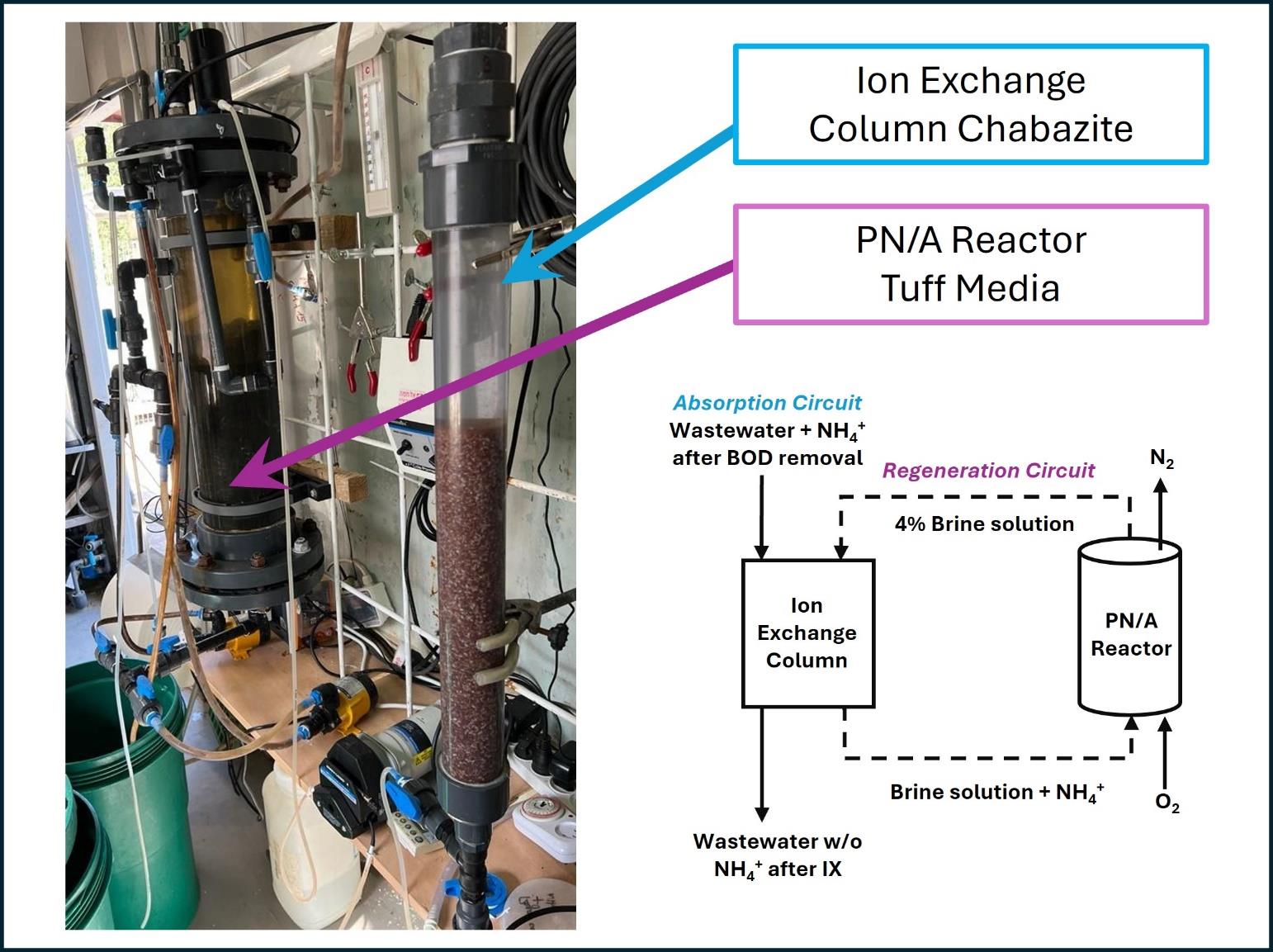
- Technion Israel: A high strength brine solution was passed through the packed column to desorb NH4+.The NH4+-rich brine was treated in a separate halophilic PN/A biofilm reactor, where NH4+ was converted to nitrogen gas (Fig. 1b).
4) Once zeolite was regenerated, adsorption and bioregeneration steps were repeated for many cycles. Little or nochemical regenerant was added to the process, and no contaminated waste brines were produced.
Quality
Research was carried out in bench-scale reactors at three universities, resulting in eight (8) peer reviewed journal articles,four (4) PhD dissertations, two (2) MS theses, one (1) patent and seventeen (17) conference presentations. A summary of each team’s major findings is provided below:
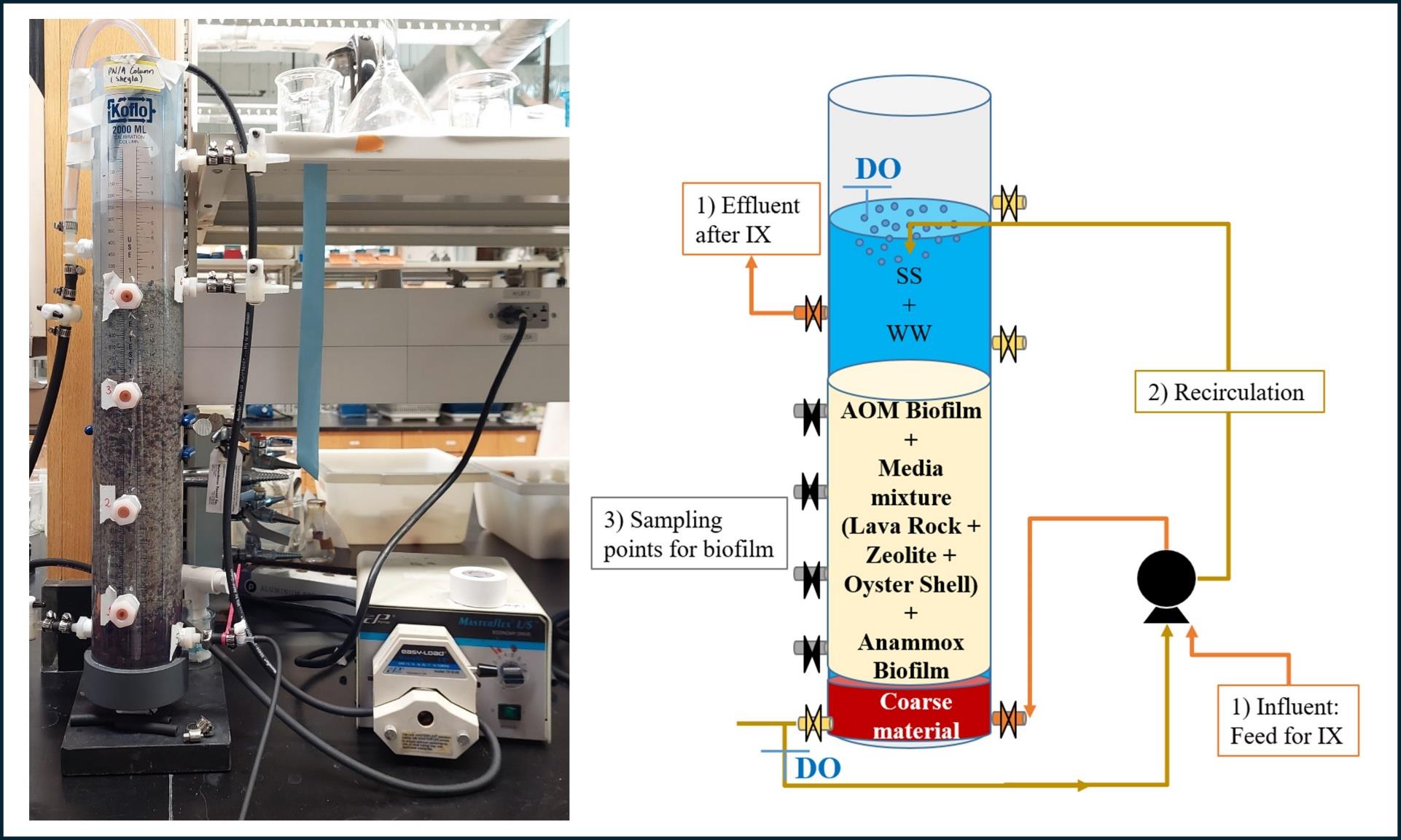
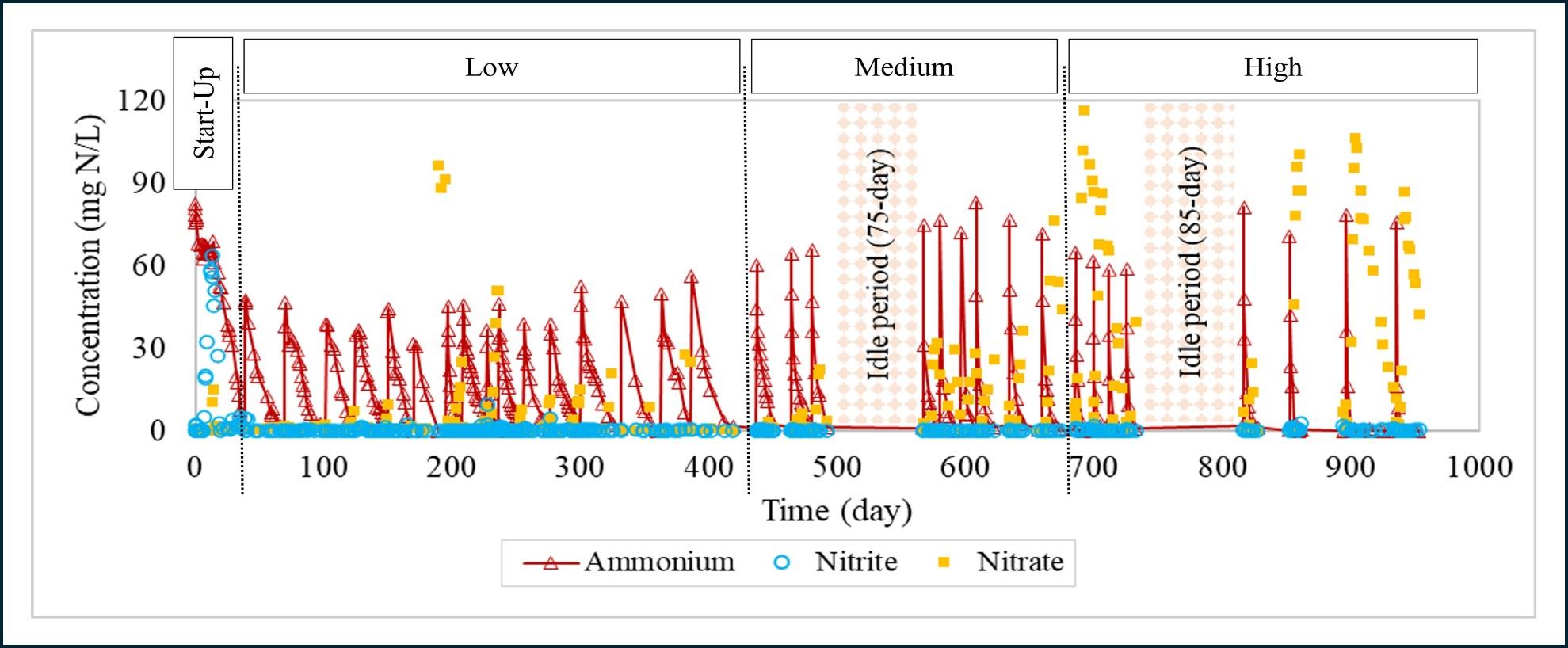
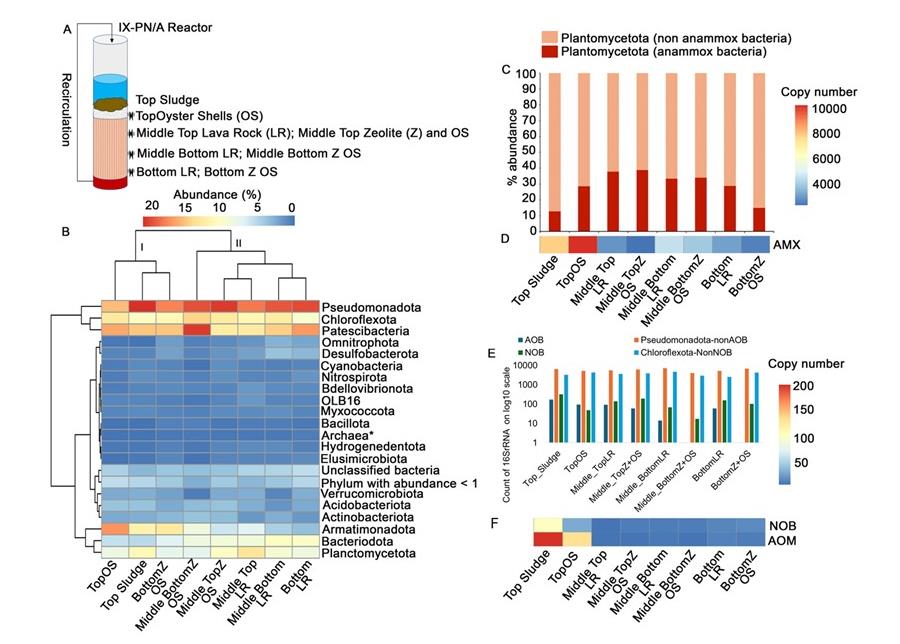
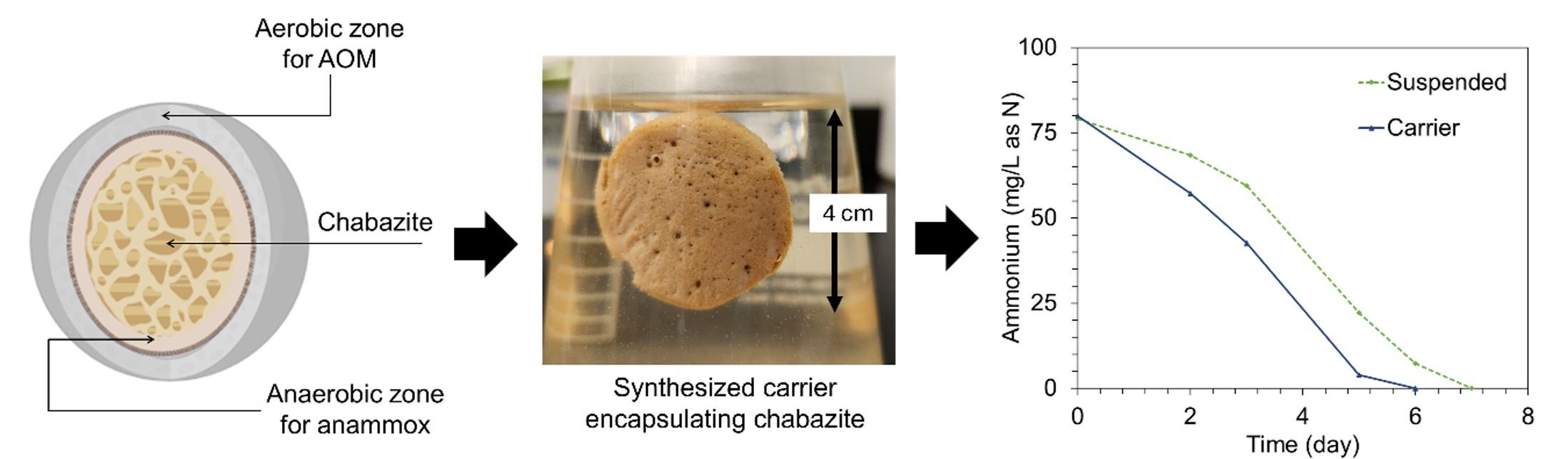
USF Team: Anammox and AOM were enriched from wastewater seed and combined in a bench-scale IX-PN/A sequencing batch biofilm reactor (SBBR) (Fig. 2). Recirculation was used to provide aeration at the top of the SBBR, while DO consumption by AOM promoted anoxic conditions for anammox at the bottom. High total inorganic nitrogen (TIN) removal efficiency (81%) and ammonium removal rates (0.11 g N/L/day) were achieved at a recirculation velocity of 1.43 m/h (Fig. 3). The core microbiome of the SBBR (Fig. 4) contained a high abundance of bacteria of the phyla Pseudomonadota, Patescibacteria, Chloroflexota, and Planctomycetota, while qPCR showed the highest ammonia monooxygenase (amoA) and anammox (amx) in the top layers. The IX-PN/A SBBR achieved stable N removal for > two years without chemical inputs, media replacement or brine waste production. The USF team also developed novel hydrogel biofilm carriers with encapsulated zeolite and anammox (Fig. 5).
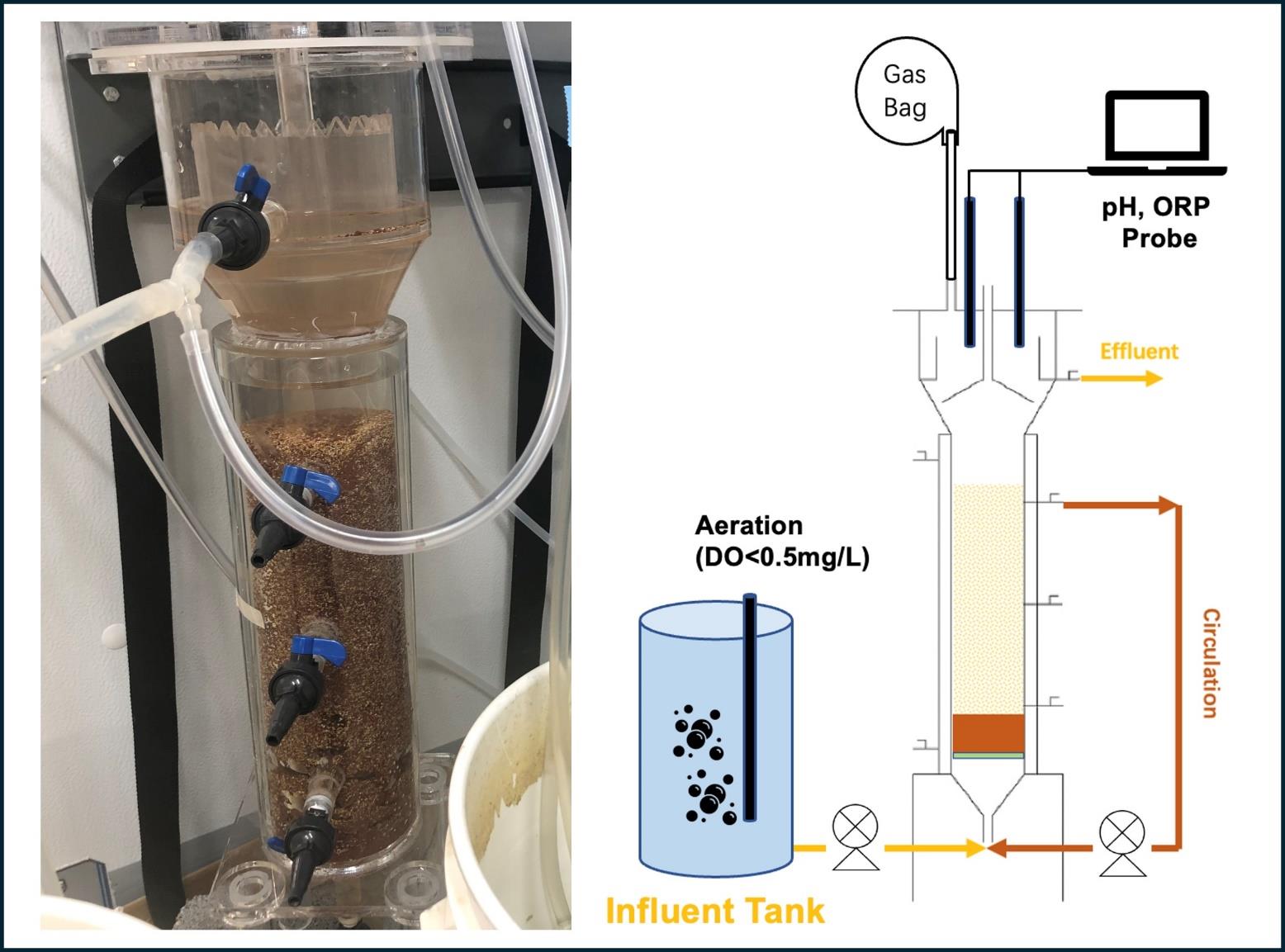
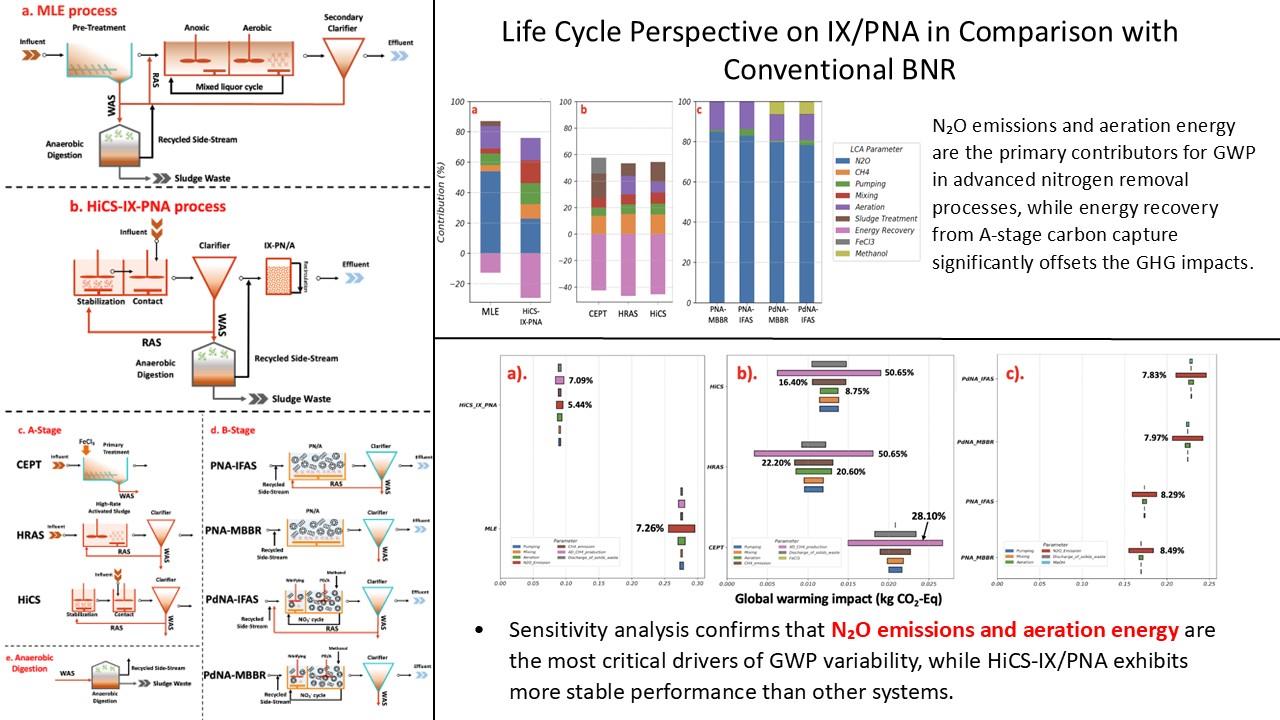
Penn State Team: IX-PN/A was carried out in upflow anaerobic sludge blanket (UASB) reactors (Fig. 6). The counter-diffusion mechanism created spatially separated redox zones, enabling efficient mass transfer and sustaining anammox activity. UASBs achieved NH4+ removal efficiencies of 63.5-87.0% across varying nitrogen loading rates (100-50 mg/L/d) and temperatures (12-22 °C). FISH analysis revealed distinct biofilm architectures, with AOM in outer layers and anammox closely associated with NOB near the zeolite surface. The dominant anammox bacteria was Candidatus Brocadia fulgida, while Feammox played an important role at low temperature. Life cycle assessment (LCA) results indicated that high-rate contact stabilization combined with IX-PNA has a lower global warming impact than conventional BNR, driven by improved bioenergy recovery and reduced N₂Oemissions and aeration energy consumption (Fig. 7).
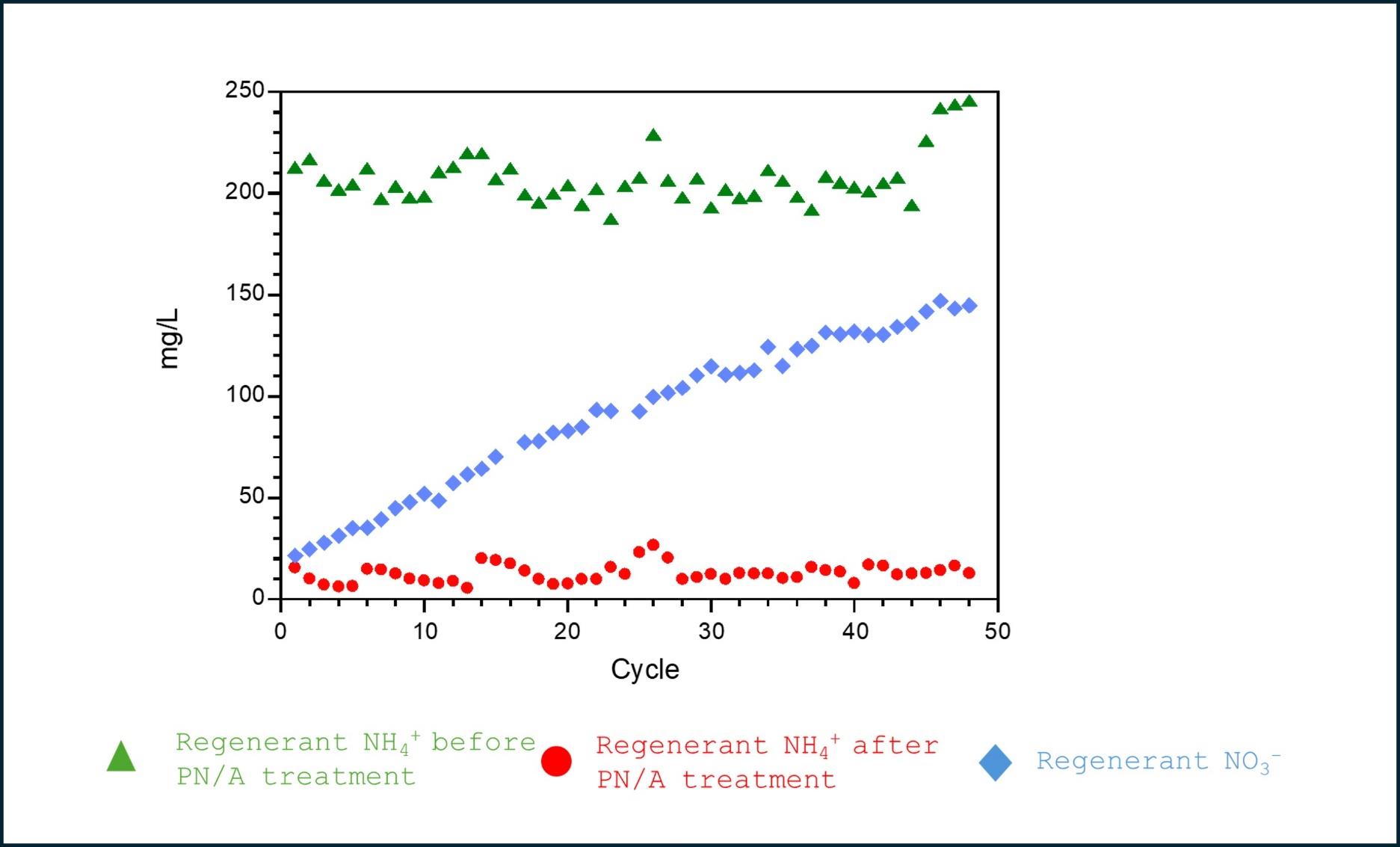
Technion Team: NH4+ was removed from MMW by a zeolite column, which was regenerated with seawater (Fig. 8). The high NH4+ strength brine solution was treated in a hypersaline PN/A reactor. The PN/A reactor initially treated recirculating brine from the IX column for 48 cycles of NH4+ absorption and bioregeneration with minimal blowdown. Cations in the regenerant solution were stable except for Ca2+, which reached values > 3,000 mg/L and caused PN/A reactor failure due to mineral precipitation. The buildup of Ca2+ in the regenerant was addressed in two ways: 1) 20 % regenerant replacement per cycle and 2) precipitation of CaCO3 via sodium carbonate addition. Both methods were effective for 30 absorption and bioregeneration cycles, allowing for stable PN/A reactor operation (Fig. 9). Microbial community analysis of the PN/A reactor by next-generation sequencing (NGS) revealed an obligately halophilic Candidatus Scalindua anammox bacteria and halotolerant Nitrosomonas AOM. NOB were not observed as a result of low DO and nitrite scavenging by anammox.
Complexity
This project offers a low-cost, low-complexity approach to achieve the environmental conditions needed to combine AOM and anammox and suppress NOB for MMW treatment. The IX units are modular and compact and may be accommodated in existing treatment layouts with minimal disruption.
Social, Public, Environmental Health and Economic Advancements
PN/A implementation for MMW treatment has the potential to reduce energy costs for aeration by ~60%, eliminate supplemental organic carbon addition for denitrification, increase bioenergy production and reduce greenhouse gas emissions. This innovative process overcomes the main limitations of PN/A application to MWW by: 1) reducing the volume of wastewater to be treated via PN/A, 2) providing a favorable COD/N ratio, and 3) ensuring high stable NH4+ concentrations and environmental conditions needed to select and retain AOM andanammox and suppress NOB and heterotrophic denitrifiers. Students working on the project increased their global competency through international collaboration and visits with Israeli researchers. The project also provided training for community college students in PA and FL to provide a diverse workforce for the water industry.
Acknowledgements: This material was based on work supported by the National Science Foundation-US-Israel Binational Science Foundation (NSF-BSF) under Grant Number 2000980.
Click images to enlarge in separate window.
 |
 |
|
Figure 1: Process flow diagrams showing how ion exchange (IX) was coupled with partial nitritation/anammox (PN/A): left) USF and PSU approach, right) Technion approach |
Figure 2: Reactor photo and schematic for USF team. |
 |
 |
|
Figure 3. Nitrogen species concentrations over 1,000 days of operation (USF team). |
Figure 4: Microbiome of IX-PNA SBBR: (a) sampling locations, (b) heatmap each phylum, (c) percent abundance of anammox and non-anammox bacteria belonging to phylumPlanctomycetota, (d) heatmap of amx694Pf/amx960r anammox, (e) AOM and non-AOM belonging tophylum Pseudomonadota, NOB and non-NOB belonging to phylum Chloroflexota, (f) heatmap of amoA1f/amoA2r AOM and nspra675f/nspra746R NOB |
 |
 |
|
Figure 5: Hydrogel biofilm carriers with encapsulated chabazite and anammox |
Figure 6: Reactor photo and schematic for Penn State team. |
 |
 |
|
Figure 7: Results of life cycle assessment (LCA) comparing High-Rate Contact Stabilization(HiCS) and IX-PN/A with other biological nitrogen removal technologies. |
Figure 8: Reactor photo and schematic for Technion team. |
 |
|
|
Figure 9: Nitrogen species concentrations before and after PN/A reactor treatment. |
Click here to return to the list of 2026 winners.
Our Partners