AAEES Kappe Lecturer
2026 Kappe Lecturer
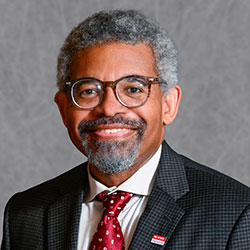
Joel J. Ducoste, Ph.D., BCEEM, F.AEESP, F.WEF
Distinguished University Professor
North Carolina State University
Education
- Ph.D., Environmental Engineering, 1996, University of Illinois, Urbana-Champaign, IL
- M.Eng., Mechanical Engineering, 1989, Rensselaer Polytechnic Institute, Troy, NY
- B.S., Mechanical Engineering, 1988, Rensselaer Polytechnic Institute, Troy, NY
Professional Affiliations
- Member, American Society of Engineering Education
- Member, American Academy of Environmental Engineers and Scientists
- Member, Water Environment Federation
- Member, Association of Environmental Engineering and Science Professor
- Member, American Water Works Association
Selected Scholarly Honors
- Distinguished University Professorship, NC State University
- Elected Fellow, Association of Environmental Engineering and Science Professors
- Warren Distinguished Lecture, University of Minnesota
- ACC Academic Leadership Network, Fellow
- Presidential Colloquium Distinguished Lecture, Brown University
- Fair Distinguished Engineering Educator Medal, WEF
- Elected Fellow of Water Environment Federation
- Board Certified Environmental Engineer Member through Eminence, AAEES
- Fulbright Fellow
- NSF CAREER Award
Joel Ducoste, Ph.D., is a Distinguished University Professor in the Civil, Construction, and Environmental Engineering Department and Associate Dean for Faculty Development and Success in the College of Engineering at North Carolina State University. As the Associate Dean, Dr. Ducoste provides leadership in faculty reappointment, promotion and tenure, the post-tenure review process, workshop and coaching opportunities, and the recognition of awards to support faculty success in the different realms of faculty responsibilities.
Dr. Ducoste is a board-certified environmental engineering member with the American Academy of Environmental Engineers and Scientists through eminence and is a recognized expert in modeling water and wastewater treatment processes using Computational Fluid Dynamics (CFD). With over 200 peer reviewed publications and research reports, Dr. Ducoste research interests include physico-chemical processes in water treatment, computational fluid dynamics modeling, water/wastewater process optimization, wastewater sewer collection system sustainability, renewable energy, plant biosystems engineering, solid waste process modeling, and disinfection of pathogenic aerosols.
Dr. Ducoste has received a number of awards including an NSF Career Award, a Fulbright fellowship, Visiting Professorships at Ghent University, South East University, and Yangzhou University, NC State mentoring awards, elected Fellow of both the Water Environment Federation (WEF) and the Association of Environmental Engineering and Science Professors (AEESP), and received the WEF Fair Distinguished Engineering Educator Medal.
He has served on several EPA Science Advisory Boards including the Charter SAB and the EPA Board of Scientific Counselors Safe and Sustainable Water Resources committee. He was elected to serve on the Board of AEESP and served as its President in 2020-2021. He currently serves on the Board of Trustees for the American Academy of Environmental Engineers and Scientists. He received a BS and MS in Mechanical Engineering at Rensselaer Polytechnic Institute, Troy, NY, and a PhD in Environmental Engineering at University of Illinois, Urbana Champaign.
After 5 years in industry at CH2M Hill as a senior process engineer and as an advance-manufacturing engineer at GE Aircraft Engines, he joined NC State in 1998.
Abstracts of Lectures Offered
A LagEulerian journey through time and space providing environmental engineering solutions and offering a framework to achieve life’s goals
In environmental engineering, multi-scale, multi-physics transport modeling requires navigating between two classical reference frames: the Eulerian view, focusing on fixed spatial coordinates, and the Lagrangian view, tracking discrete trajectories. This presentation details my journey where integrated computational fluid dynamics (CFD) models solved long-standing process challenges. In particle aggregation, the research advanced from decoupled frameworks to directly embedding flocculation kinetics into CFD code to reveal spatial floc size variations. In biological wastewater treatment, a coupled 2-D cellular automata-CFD suspended biofilm model provided a mechanistic explanation of aerobic granule formation under varying hydrodynamics. For UV disinfection and advanced oxidation processes (AOP), CFD simulations successfully quantified UV dose distribution variations caused by inlet hydraulics and tracked toxic parent compounds alongside subsequent intermediates, respectively. Extending these techniques to solid waste management, a transient 3-dimensional finite element model (FEM-3DM) characterized exothermic reactions such as aluminum corrosion and ash hydration to optimize waste disposal strategies in elevated temperature landfills (ETLFs). Most recently, this approach was applied to airborne pathogen control where coupled CFD and optical simulations demonstrated that photon recycling via highly reflective surfaces in a personal-scale UV LED respiratory reactor, enables over 2 log inactivation, outperforming N95 masks during human respiration.
Beyond using mathematical models that helped me provide transformative engineering solutions, the “LagEulerian” concept also offers a dual-lens framework for navigating professional goals. A Lagrangian perspective emphasizes internal personal change, focusing on tracking one’s unique trajectory and immediate growth. Conversely, an Eulerian perspective prompts researchers to step back and incorporate others’ points of view. By mapping professional surroundings from this broader frame of reference, individuals can better identify opportunities such as meeting colleagues, attending critical conferences, securing job or teaching positions, and acquiring vital network advice. Attendees of this presentation will gain both rigorous modeling insights and a transformative paradigm to successfully engineer their life goals.
Hunting the FOG Whales: A Roadmap to Eliminating Sewer Fat Oils and Grease Deposits
“Call me Ishmael.” In this lecture, I invite you aboard a subterranean voyage to hunt the most destructive monsters threatening modern urban infrastructure: “FOG Whales.” This presentation exposes how these giants (known as Fats Oils and Grease Deposits) form and how to eliminate them. Also known colloquially to the public in Europe as “fatbergs” such as London’s 130-tonne FOG deposit discovered in 2017 and its recent 100-tonne sibling found blocking Whitechapel sewers in December 2025, these massive FOG deposits can trigger sanitary sewer overflows (SSOs).
Our journey begins by first identifying that these hardened FOG deposits are metallic salts formed via saponification reactions between free fatty acids and calcium ions. Our expedition further explores how varying environmental conditions (specifically pH, temperature, and calcium solubility) help accelerate saponification kinetics, and how pipe construction materials dictate the attachment and structural integrity of these FOG solids. Traditional concrete pipes actively feed these beasts; calcium hydroxide leaching elevates surface pH, creating ideal nucleation sites for strongly adhered FOG layers. To counter this, I will share how we introduce material-focused mitigation strategies, including High Volume Fly Ash (HVFA) concrete, which can significantly reduce calcium leaching and weaken FOG adhesion. Finally, I will unveil our ultimate navigational chart called the FOG Sewer Waste Management System (FOG-SWMS) to predict where these monsters may lurk. By modifying the source code to embed mass-action based mechanistic kinetics directly into the EPA Storm Water Management Model (SWMM) domain, FOG-SWMS is a scalable platform capable of simulating full-scale networks. This presentation will deliver a comprehensive overview of the pioneering science, engineered solutions, and scalable modeling frameworks developed over two decades to systematically reduce the occurrence of these FOG deposits. Ultimately, this lecture equips engineers and municipalities with the chemical, material, and predictive strategies (or harpoons) required to permanently rid our wastewater collection systems of FOG deposit Whales.
The fee for hosting the Kappe Lecturer is $1,250. If your university is selected, you will be billed prior to the lecture.
Previous Kappe Lecturers
| 2025 |
Floris, Vinio |
Brochure |
| 2024 |
Benson, Craig H. |
Brochure |
| 2023 |
Yeh, Daniel H. |
Brochure |
| 2022 |
Wert, Wendy A. |
Brochure |
| 2021 |
Dzombak, David A. |
Brochure |
| 2020 |
Oerther, Daniel B. |
Brochure |
| 2019 |
Love, Nancy G. |
Brochure |
| 2018 |
Rood, Mark J. |
Brochure |
| 2017 |
Reible, Danny D. |
Brochure |
| 2016 |
Murthy, Sudhir |
Brochure |
| 2015 |
Banner, Jay |
Brochure |
| 2014 |
Neethling, JB |
Brochure |
| 2013 |
Tchobanoglous, George |
Brochure |
| 2012 |
Novotny, Vladimir |
Brochure |
| 2011 |
Patterson, James W. |
Brochure |
| 2010 |
Barlaz, Morton A. |
Brochure |
| 2009 |
Surampalli, Rao Y. |
Brochure |
| 2008 |
Brown, Jeanette A. |
Brochure |
| 2007 |
Tekippe, Rudy J. |
Brochure |
| 2006 |
Gilbert, Jerome B. |
Brochure |
| 2005 |
Vasuki, N.C. |
Brochure |
| 2004 |
Logsdon, Gary S. |
| 2003 |
Lue-Hing, Cecil |
| 2002 |
Crook, James |
| 2001 |
Daigger, Glen T. |
| 2000 |
Eckenfelder, W. Wesley |
| 1999 |
Trussell, R. Rhodes |
| 1998 |
Kuchenrither, Richard D. |
| 1997 |
Albertson, Orris E. |
| 1996 |
Whitman, Ira L. |
| 1995 |
Okun, Daniel A. |
| 1994 |
Ford, Davis L. |
| 1993 |
Kavanaugh, Michael C. |
| 1992 |
Touhill, C. Joseph |
| 1991 |
Carroll, William J. |
| 1990 |
Busch, Paul L. |
| 1989 |
Schwartz, Jr., H. Gerard |
|